Course
Advanced Scientists Course (Ages 15–18)
Course Progress
- Level - Advanced
- Total Enroll - 10+ Thousands
- Duration - 5 Months
Material Includes
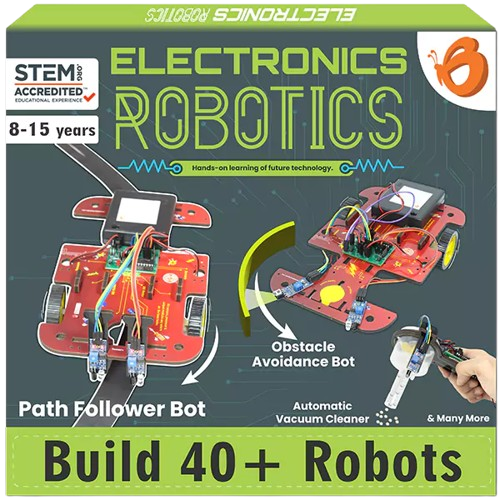
- 40 In 1 Electronics Master Kit
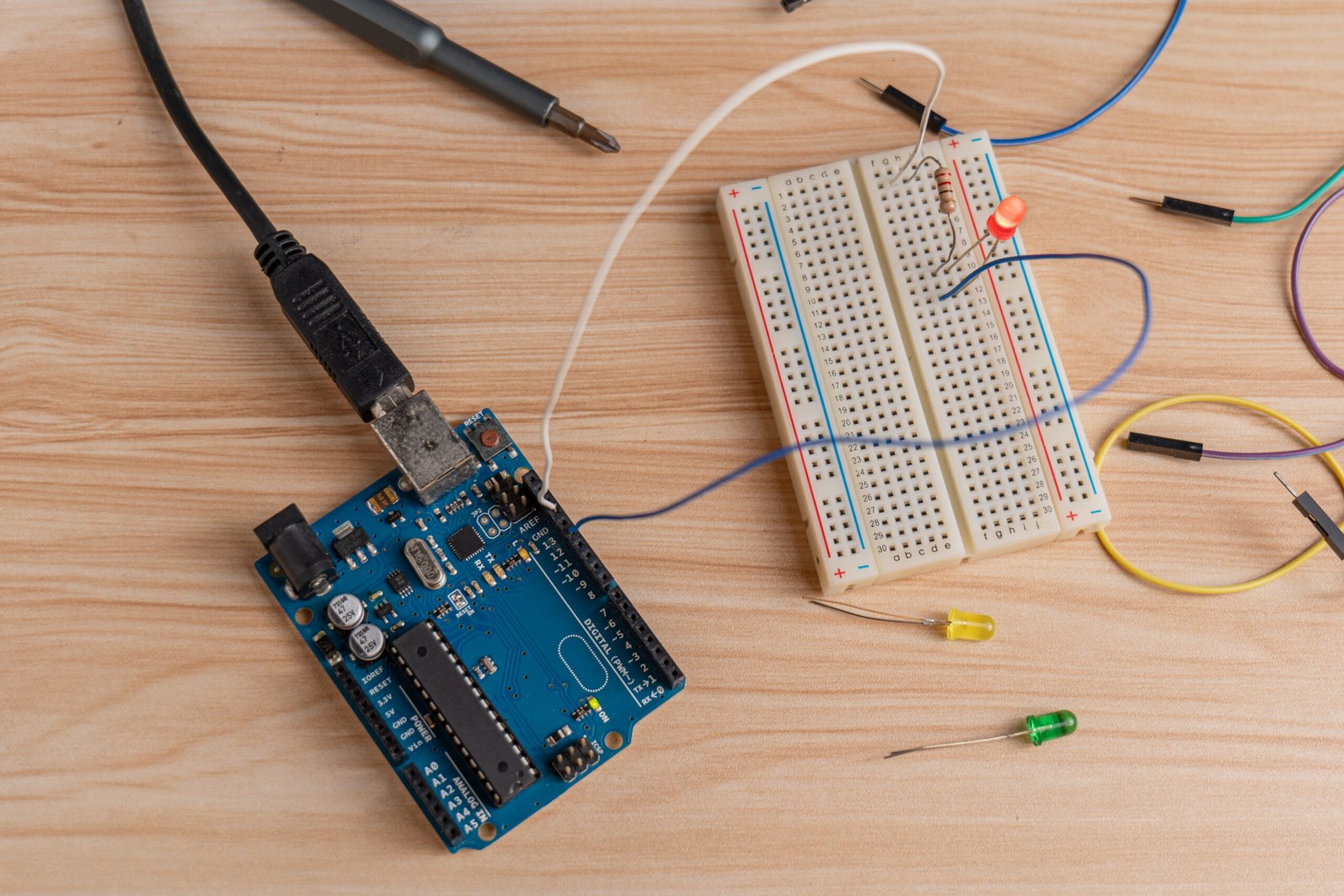
- Basics of Arduino
Audience
- Easily set prerequisites to structure your courses and guide student progress.
About Course
Designed for future innovators, the Advanced Scientists course explores advanced robotics, automation, and AI-driven applications. Students learn how to integrate artificial intelligence and data-driven decision-making into robotic systems. They work on real-world inspired challenges, preparing them for higher-level STEM competitions and future careers in technology and engineering.
Duration : 5 Months
What Your Kids Will Learn :
- 40 in 1 Electronics Robotics Master Kit
- Basics of Arduino
- 10 Application Projects
Key Highlights:
Introduction to AI and machine learning concepts
Build autonomous robots with advanced sensors
Learn real-world automation logic
Work on research-inspired innovation projects
Course goal
Introduce advanced topics: sensor fusion, autonomy, control logic, basic computer vision/machine learning classroom-friendly approaches, and system integration — preparing students for competitions and advanced study.
Representative projects
Autonomous maze solver, vision-assisted line follower, micro-TinyML classifier, basic SLAM demo concept (using encoders + sensors).
Learning outcomes
Understand fundamentals of autonomy and perception.
Use pre-trained ML models or TinyML for simple inference.
Integrate sensors, control loops and high-level decision logic.
Document system architecture and test results.
Materials / Kit
Advanced kit: microcontroller (Raspberry Pi / OpenMV / ESP32 with camera) or combo, motor drivers, encoders, IMU, ultrasonic/Time-of-Flight sensors, camera (OpenMV/RPI camera), power bank, breadboards, wiring, mounting hardware.
Software: Python basics, MakeCode or MicroPython, TensorFlow Lite (if used), OpenMV IDE (if used).
Class logistics
Class size: 6–10 students (higher instructor ratio).
Session length: 2 hours minimum.
Pre-req: basic programming (Python/Arduino) and mechanical understanding recommended.
Assessment & certification
Assessment by rubric: system design, functionality, robustness, report.
Certificate: “Advanced Scientist — Autonomous Systems & AI Basics.”
Optional: badge for ML/Computer Vision module.
Instructor notes
Emphasize simulation and testing before build (saves hardware failure).
Use cloud/offline pre-trained models to avoid long training time.
Prepare spare hardware and debug checklist.
No Announcements Yet!!